History meets contemporary art in the heart of Cape Town
After a ten-year closure for renovation, one of the Mother City’s oldest and most significant public buildings and provincial heritage sites has reopened.
Where:
Cape Town
Publication:
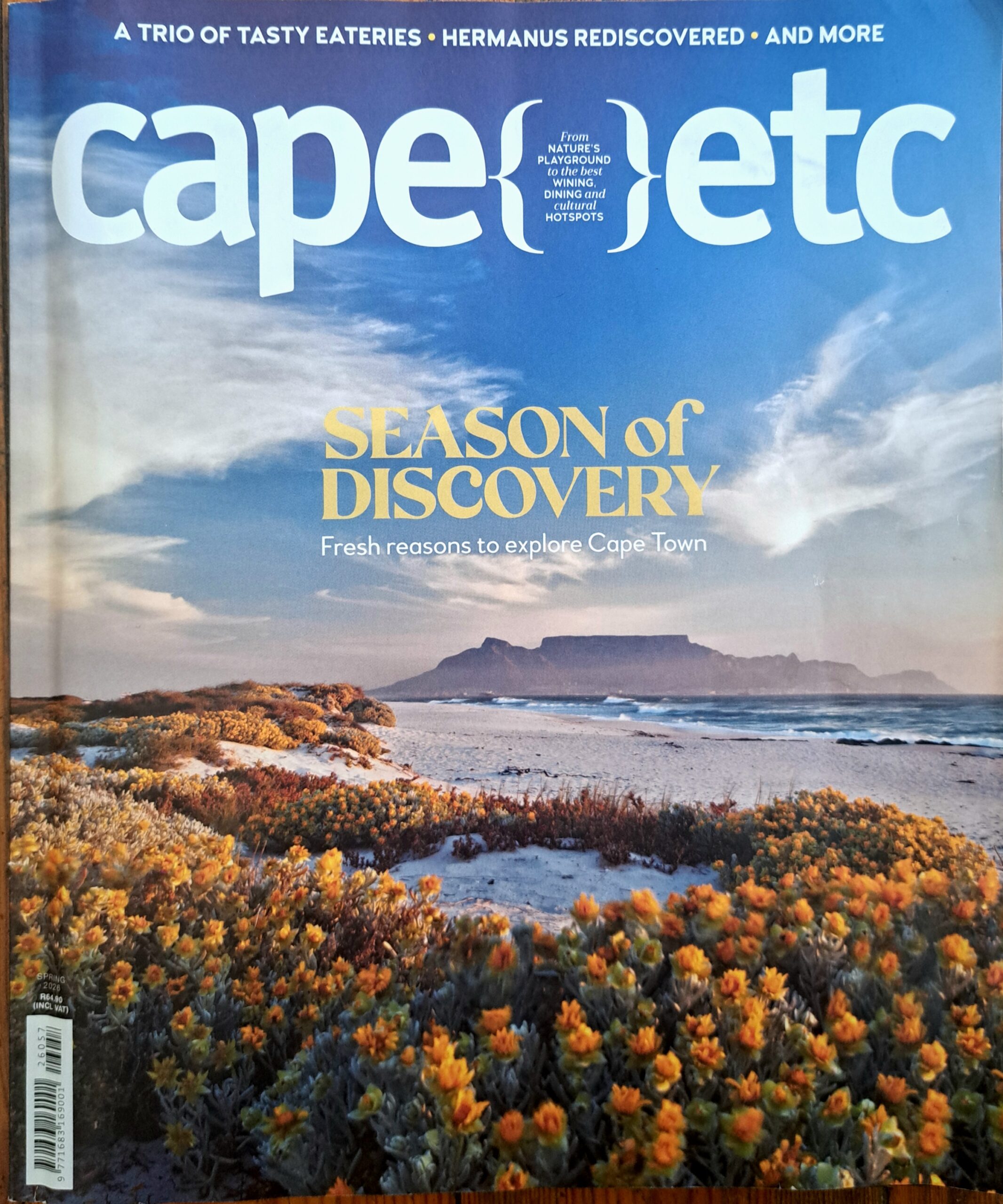
Cape etc.
Date:
September 2026
Images:
Nigel Pamplin and Judy Bryant
Not only is the Old Town House on Greenmarket Square one of the finest examples of Cape Rococo architecture – distinctive features include an elegant triple-arched portico, decorative plaster mouldings and fanlights, and a bell tower – but it also houses one of the world’s finest collections of 17th-century Dutch and Flemish paintings outside Europe and North America.
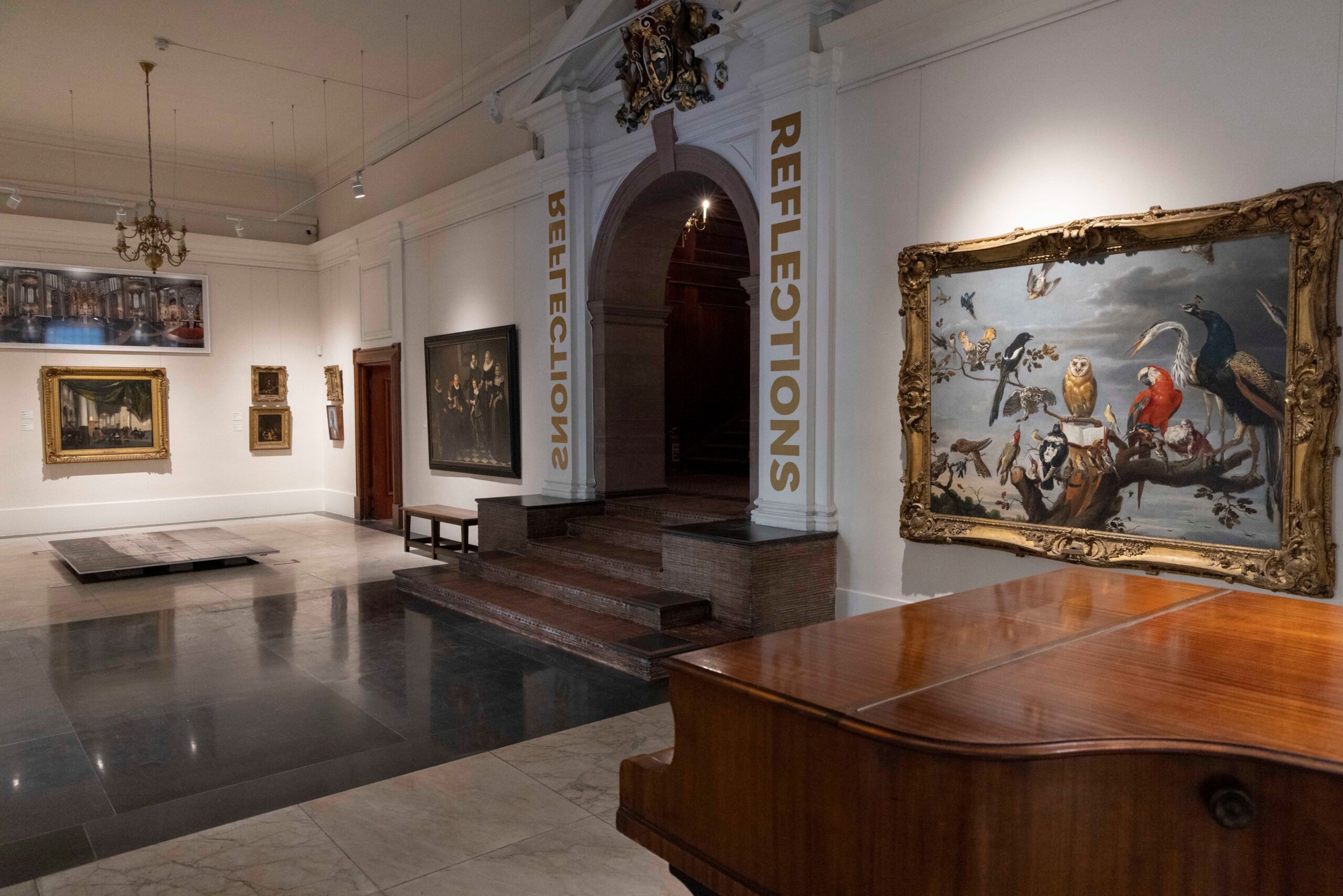
As if that’s not enough to attract interest, the current exhibition, Reflections, displays works by artists of the calibre of Frans Hals, Jan Steen, Jacob van Ruisdael, Anthony van Dyck and the School of Rembrandt, juxtaposed with thought-provoking South African art, ceramics, prints and installations.
The Old Town House has become contemporary, even cool, as the current reimagining offers immediacy and brings a fresh perspective when viewed through this layered historical lens.
Reveal more...
Origins of a landmark
The central site – it’s reputed that some Cape Town map locations were measured from a circle on the stoep, outside the front door – first housed the Burgher Watch House around 1716. This was the headquarters of Cape Town’s volunteer militia and fire brigade, protecting the growing Dutch settlement.
As Cape Town prospered, the modest building grew inadequate and the current building was constructed between 1755 and 1761. It became the magistrate’s court, police station and city hall.
The building’s future was uncertain when the new city hall opened on the Grand Parade in 1905. The turning point came in 1914, when mining magnate and philanthropist Sir Max Michaelis donated his outstanding art collection.
The City of Cape Town offered the Old Town House as a permanent home for the treasures. Architect J.M. Solomon restored the building, adapting the interior to resemble a 17th-century Dutch guild hall.
Having served as an art museum and cultural venue for over a century, the Old Town House was closed to the public in December 2015 when two electrical incidents made the building unsafe.
Renovation included replacing and upgrading the electrical system, repairing water damage, waterproofing the roof, sanding and revarnishing the old timber floors, and installing energy-efficient lighting, plus specialist conservation work.
A new chapter
The re-opening was marked by the acquisition of a magnificent Robert Gwelo Goodman oil, portraying the Old Town House façade in 1918, by the Rowland and Leta Hill Trust and The Friends of the Michaelis Collection.
The current exhibition, Reflections, comprises three interrelated displays based on Iziko’s historical collections: The Michaelis Collection of Dutch and Flemish old masters; Woodcuts Across the World – 17th-19th-century Edo-period Japanese prints; and Trade Ceramics and Circles of Influence.
These precious items from Iziko’s historical collections are offset by contemporary works, some from Iziko Museums and others on loan from galleries and collectors.
“The exhibition encourages visitors to view the Old Town House and collections not as relics of the past, but as living archives – evolving, inspiring, and provoking new ways of seeing,” say Iziko Museums curators Andrea Lewis, Andrew Lamprecht and Esther Esmyol. “It celebrates history, renewal, and the evolution of interpretation over time.”
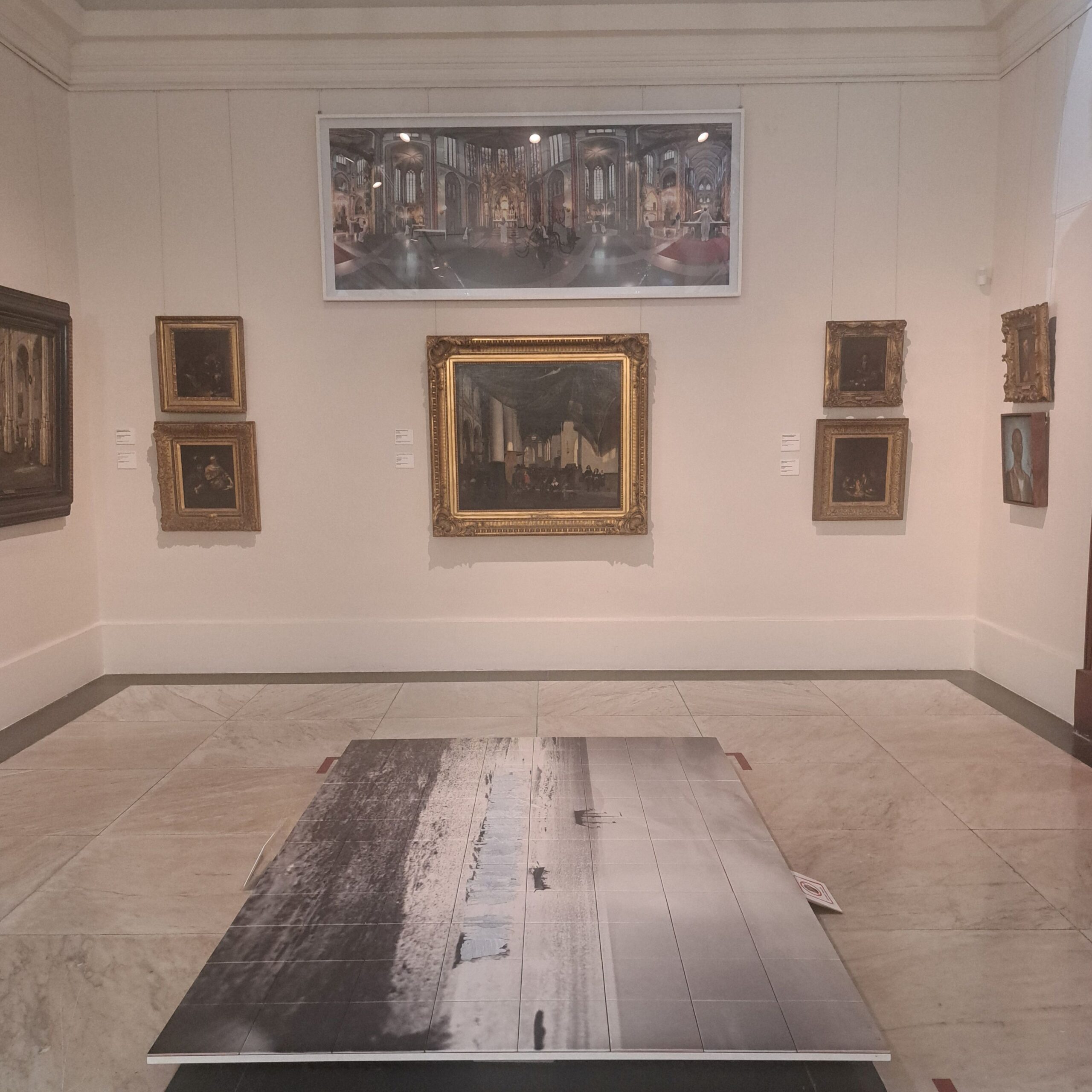
For example, as you enter the exhibition, Emanuel de Witte’s ancient Interior of the Oude Kerk, Amsterdam (1650) hangs below a Lightjet chromogenic print of the same church interior, by South African twin artists Hasan and Husain Essop (2011).
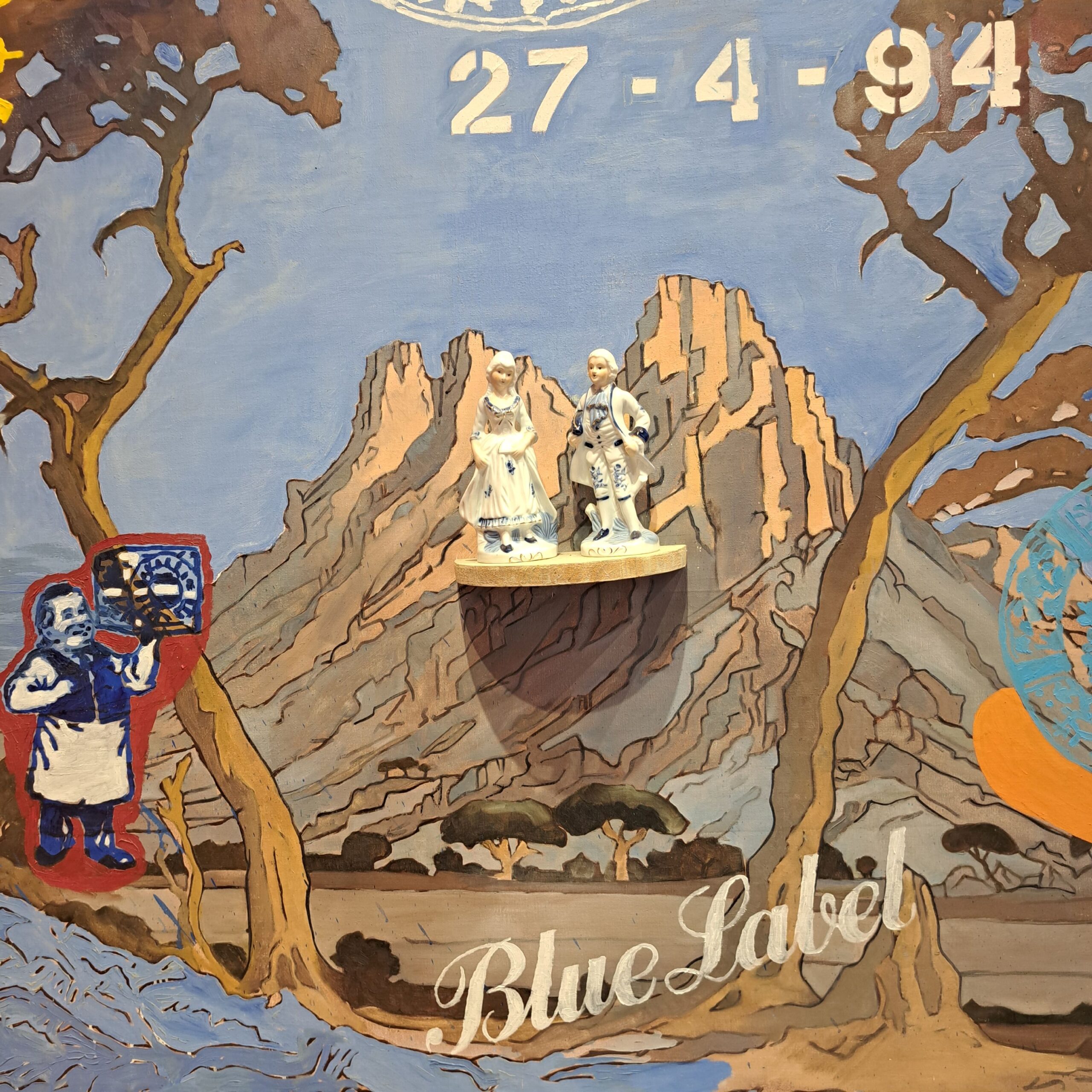
In the same room, South African Haroon Gunn-Salie’s and Brazilian Aline Xavier’s 2021 Overboard features Delft-style tiles printed with the Amersfoort – the first slave ship to dock at the Cape – overlaid with hand-painting that erases the Dutch colonial presence and reframes this 1658 voyage.
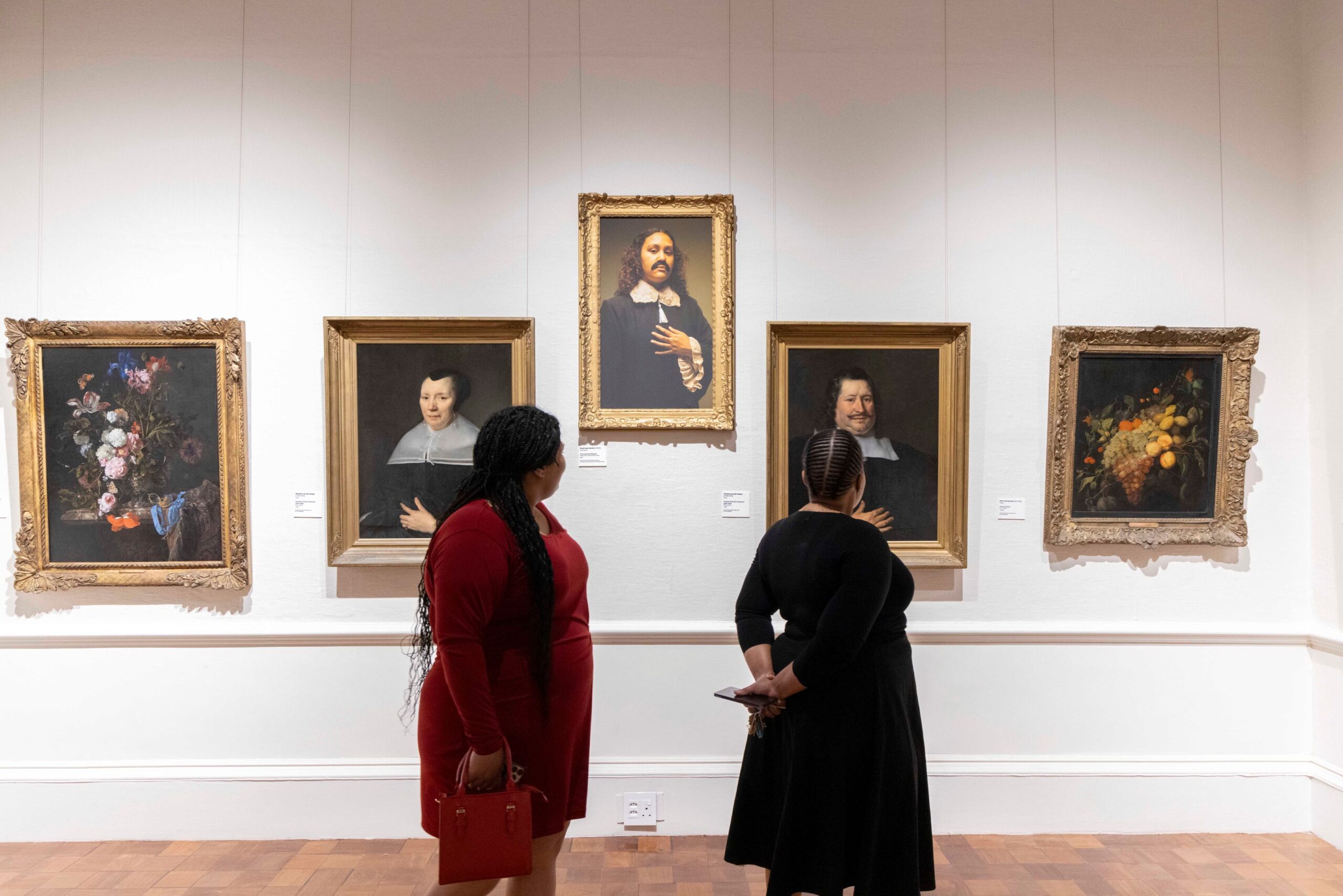
Recent Michaelis School of Fine Art graduate Brook-Lynn Norkie’s The wrong Van Riebeeck (2024) hangs above 17th-century Dutch portraits of a man and woman.
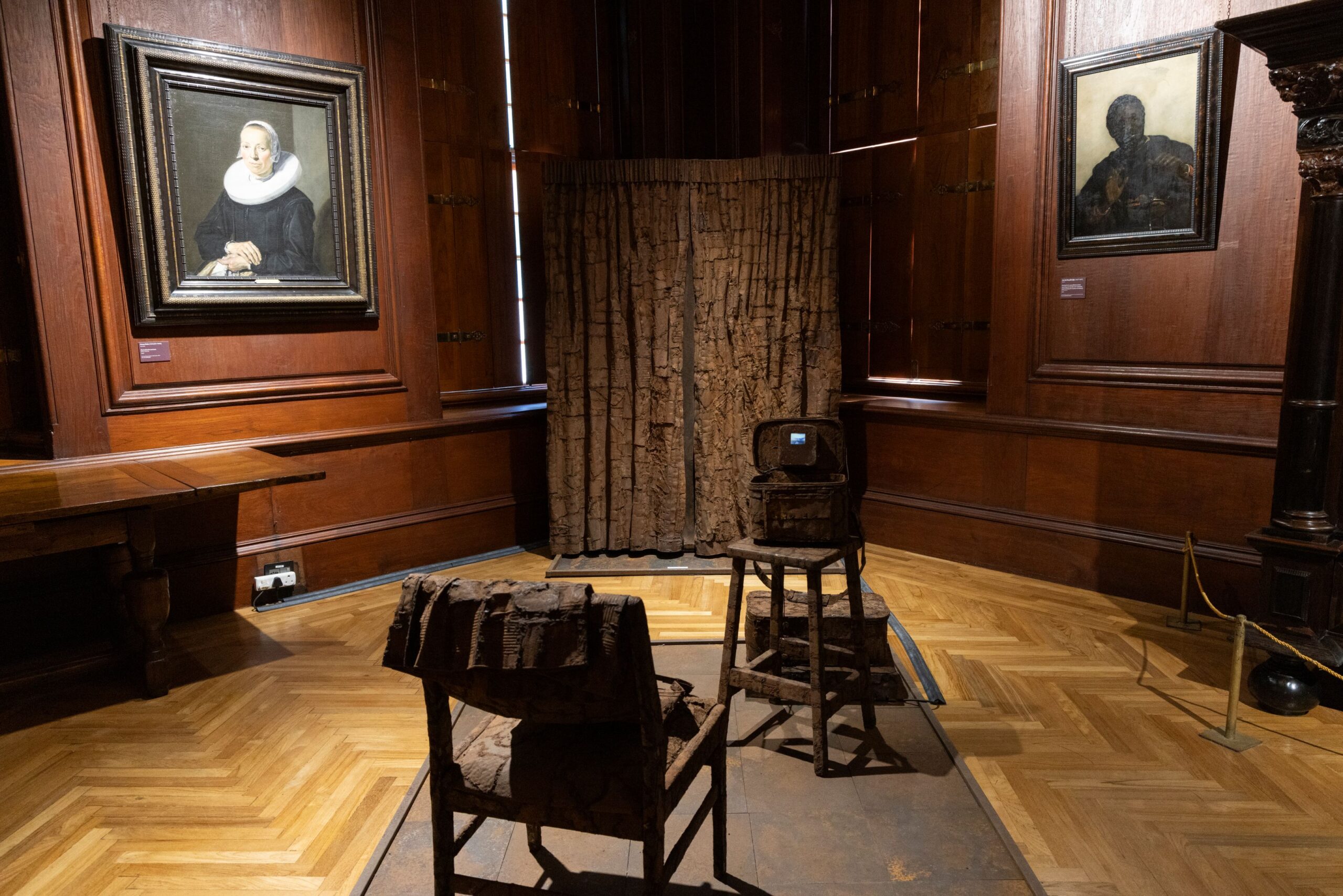
Frans Hals’s 1644 Portrait of a Woman is in the same wood-panelled room as Jan van der Merwe’s 2004 installation It’s cold outside, inspired by van der Merwe’s mother’s move to a retirement home.
Repurposed from rusted metal, a chair, draped with a woman’s petticoat, a vanity case and other personal items evoke a feeling of absence.
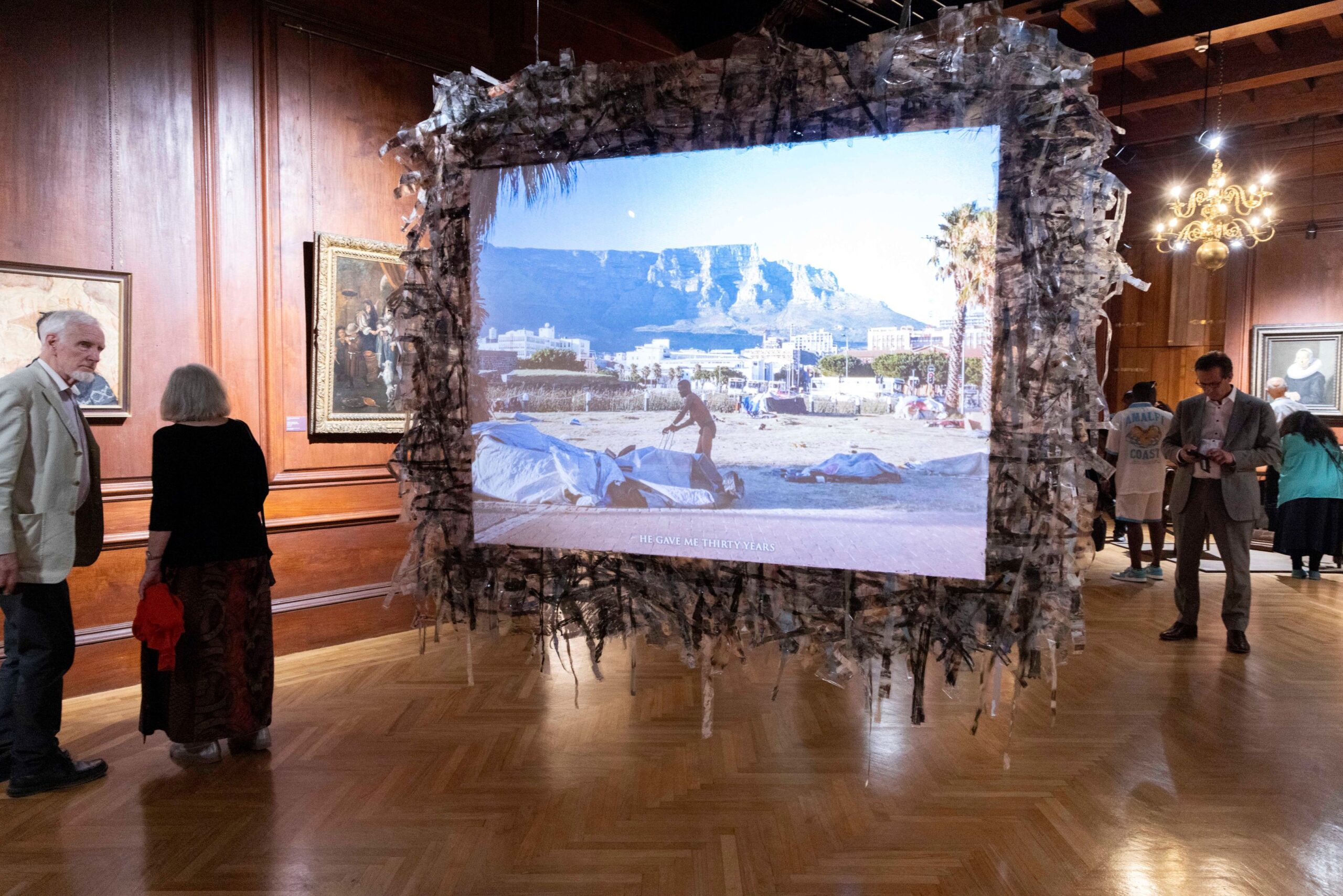
Michael Subotzky’s Epilogue Projection Frame (2025) installation centres on Hermanus van Wyk, a man he has collaborated with for two decades. Created using Subotzky’s distinctive sticky-tape transfer technique, the work presents van Wyk as both an individual and a symbol of South Africa’s complex history.
In other rooms, beautiful ceramics such as a pair of late 17th-century dishes with the VOC monogram at the centre, surrounded by birds, peonies and pomegranates, are offset by salmon-pink walls and black-and-white chequerboard tiles, edged with a row of blue-and-white tiles.
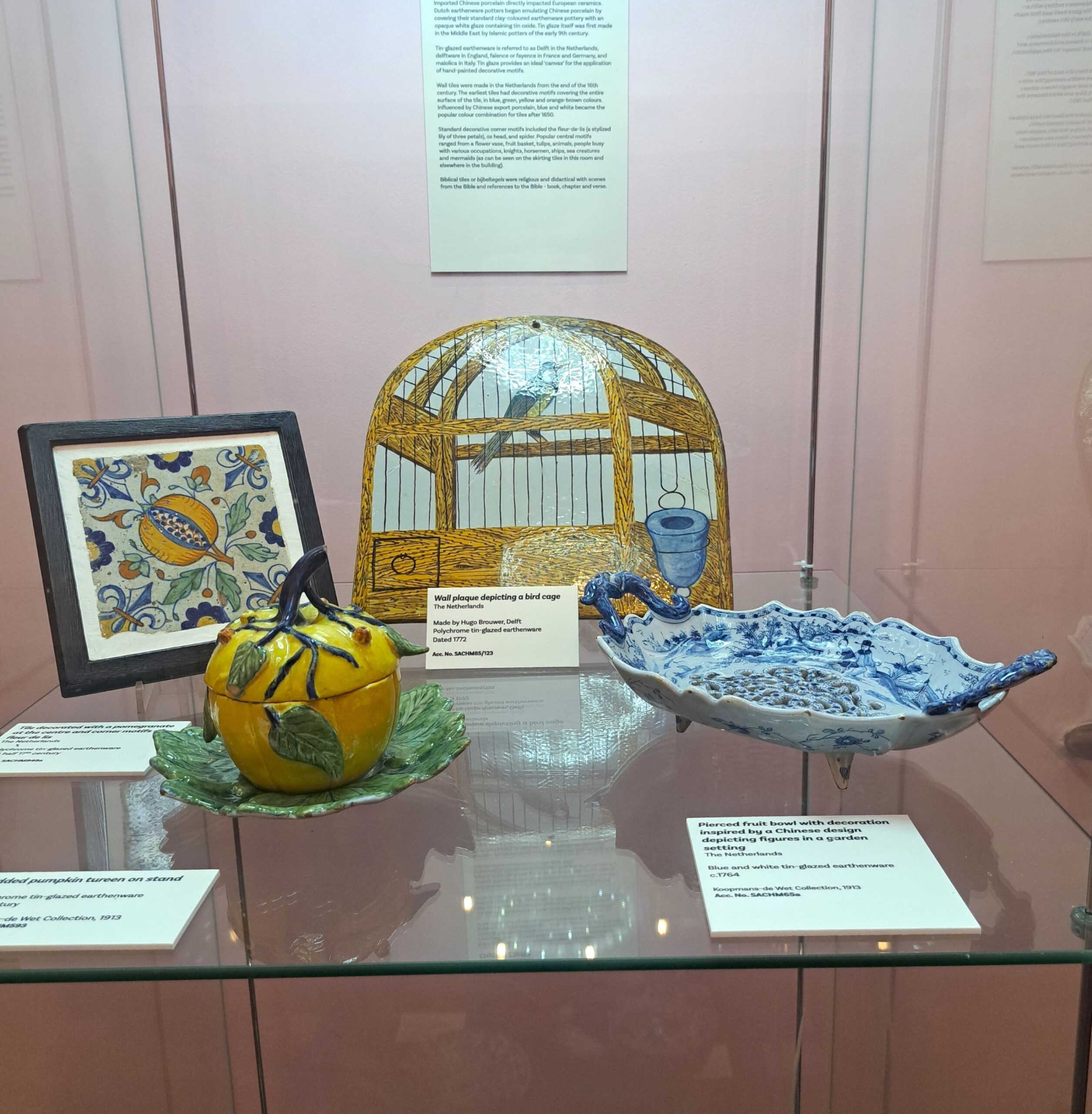
Many centuries-old Delft ceramics appear decidedly modern. A 1772 wall plaque depicting a bird in a wooden cage, a yellow pumpkin tureen entwined with glossy green leaves, and a 17th-century tile decorated with a pomegranate could have been created this decade.
The older generation of potters – Esias Bosch, Hyme Rabinowitz, Ncamekile Kokane, Tim Morris, Ian Calder – is well-represented, together with current makers such as John Bauer, Lisa Ringwood, Katherine Glenday, Rory Emmett and Michael Chandler.
An enormous gourd-shaped vessel by Ringwood (2024), for example, blends landscapes reminiscent of Asian export ceramics with local birds, plants, flowers and Cape baboons.
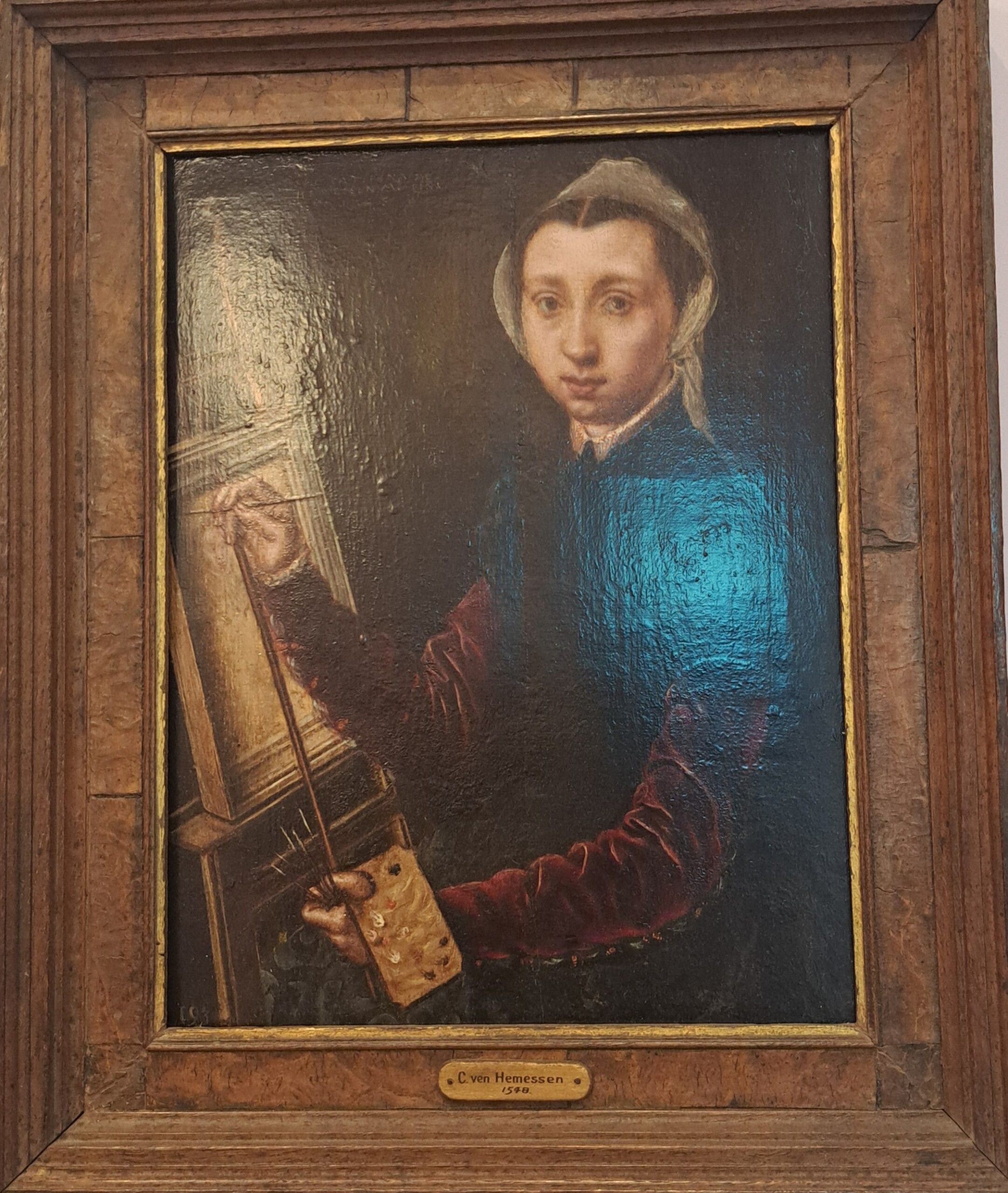
This is also an opportunity to view a self-portrait by pioneering 16th-century Flemish artist Catharina van Hemessen – the National Gallery in London will unveil the first UK exhibition devoted to her in March next year.
More than a celebration of lovely objects, Reflections reminds us of how historical collections can be reinterpreted through a contemporary lens. By placing centuries-old treasures alongside thought-provoking works by leading South African artists, the exhibition invites visitors to view both in a new light.
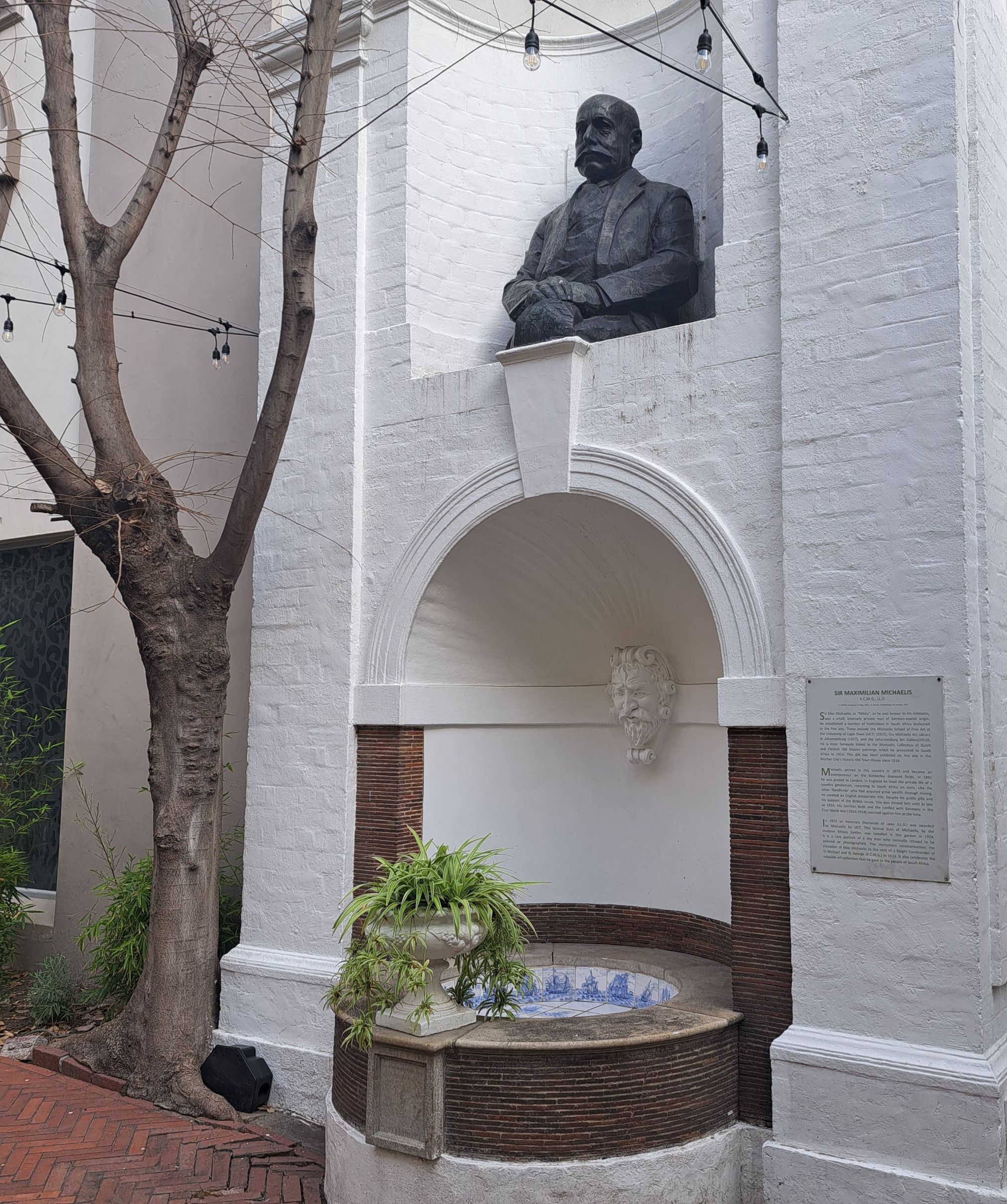
After your visit, relax in the courtyard and order a coffee from the friendly barista. You’ll be in good company – look up, and you’ll spot a bronze bust of Sir Max by Moses Kottler above a fountain inlaid with blue-and-white tiles of sailing ships by Cape Town artist Ella-Lou O’Meara. And on the same wall, a blue-and-white tile plaque depicts Max, the resident museum cat from 1989 to 2007.
Find out more:
The Michaelis Collection will remain on permanent display, with contemporary works rotating periodically.
The Iziko Old Town House on Greenmarket Square in Cape Town is open Monday to Saturday from 09:00 to 17:00. Saturday hours are 08:30 to 16:00 in winter. https://www.iziko.org.za/museums/old-town-house/
Tel: 021-481 3800 | Email: info@iziko.org.za
Captions (credit Nigel Pamplin and Judy Bryant)